Parents play the most influential role in shaping their children’s health habits. From the food kids eat to how they manage screen time, stress, sleep, and friendships, daily choices are shaped at home. The goal isn’t perfection — it’s building consistent patterns that help children grow into confident, healthy decision-makers.
Healthy choices aren’t just about vegetables and exercise. They include emotional regulation, responsible technology use, and lifelong learning habits. When parents approach these areas intentionally, children gain tools that last well beyond childhood.
A Quick Overview
Children model what they see more than what they’re told.
Small, consistent routines matter more than occasional big efforts.
Conversations about choices should be ongoing, not reactive.
Structure and flexibility can coexist.
Encouragement builds autonomy; control often builds resistance.
The Foundation: Modeling Healthy Behavior
Children watch everything. If they see adults handling stress constructively, eating balanced meals, moving regularly, and setting boundaries with devices, they absorb those patterns as “normal.”
This doesn’t mean parents must be flawless. In fact, acknowledging mistakes — “I stayed up too late on my phone; I’m tired today” — teaches reflection and accountability.
When kids see:
Balanced meals at the table
Adults taking walks or exercising
Calm conflict resolution
Consistent bedtime routines
they internalize those behaviors without formal instruction.
Setting an Example of Lifelong Learning
Healthy choices also include intellectual growth. When children see parents reading, exploring new ideas, or developing new skills, they learn that growth never stops. Modeling curiosity shows that learning is not just a school requirement — it’s part of a fulfilling life.
By furthering your own knowledge through earning an online degree, you model the importance of continuous learning while advancing your career. For example, pursuing an IT-focused program can help you build career-relevant skills in information technology, cybersecurity, and related fields — if that path interests you, you can check this out to explore options.
A Simple Framework for Encouraging Healthy Decisions
Rather than lecturing, try this practical structure:
1. Explain the “Why”
Kids are more cooperative when they understand purpose. Instead of “Eat your vegetables,” try: “Vegetables help your body grow strong and fight sickness.”
2. Offer Limited Choices
Autonomy builds confidence. “Would you like carrots or cucumbers?” gives control within healthy boundaries.
3. Practice Together
Cook meals as a family. Take a short evening walk. Stretch before bed. Shared habits stick.
4. Reinforce Effort, Not Perfection
Praise the attempt: “I noticed you chose water instead of soda. That was thoughtful.”
5. Keep the Conversation Open
Ask: “How did that make you feel?” Reflection strengthens decision-making muscles.
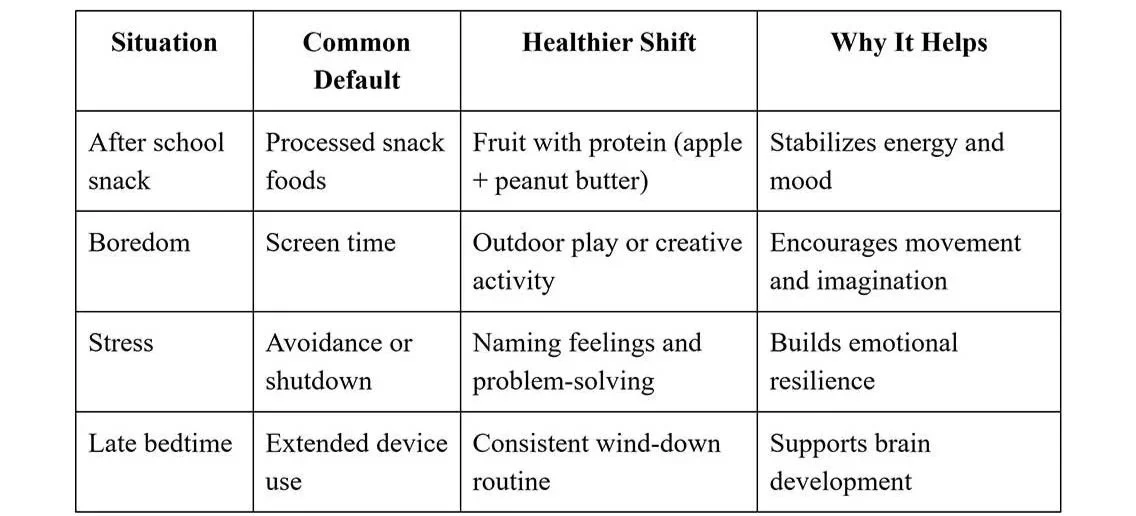
Everyday Situations and Healthier Alternatives
Better Sleep, Better Choices
Sleep plays a critical role in children’s physical growth, emotional balance, and ability to learn. When kids consistently get enough rest, they are more focused in school, better able to manage frustration, and more likely to make thoughtful decisions throughout the day. Poor sleep, on the other hand, often shows up as irritability, low energy, difficulty concentrating, or impulsive behavior. Parents can support better sleep by keeping bedtimes and wake times consistent, creating a calm wind-down routine before bed, limiting screen use in the hour leading up to sleep, and ensuring the bedroom is cool, dark, and quiet. If you need help sleep training a younger child, take a look at the resources offered at Sleepnowbaby.com.
Nutrition Without Power Struggles
Food battles can backfire. Instead of labeling foods “good” or “bad,” talk about “everyday foods” and “sometimes foods.” This reduces shame and builds balance.
A few helpful strategies:
Keep healthy options visible and accessible.
Avoid using dessert as a reward.
Involve children in grocery shopping.
When children feel involved, they’re more invested in the outcome.
Movement as a Lifestyle, Not a Chore
Physical activity doesn’t have to mean organized sports. Dancing in the kitchen counts. So does a family bike ride or a living room obstacle course.
The key is consistency and enjoyment. When movement feels like fun rather than obligation, children are more likely to sustain it.
A Helpful Resource for Family Health
ChooseMyPlate.gov
The U.S. Department of Agriculture’s MyPlate website offers clear, research-based guidance on balanced meals, portion sizes, and healthy habits for families. It includes printable tools, kid-friendly tips, and practical meal planning ideas.
This resource can help parents simplify nutrition conversations using a visual plate model that’s easy for children to understand.
Frequently Asked Questions
How can I encourage healthy eating without forcing it?
Offer consistent healthy options, avoid pressure, and let children listen to their hunger cues. Repeated exposure increases acceptance over time.
What if my child resists physical activity?
Focus on fun, not fitness. Try different activities until something clicks — swimming, biking, dancing, or hiking.
How much screen time is reasonable?
It depends on age, but balance is key. Prioritize sleep, physical activity, schoolwork, and family interaction first.
How do I talk to teens about risky choices?
Stay calm and curious. Ask open-ended questions and listen more than you lecture. Teens respond better to guidance than control.
Building Emotional Awareness
Healthy choices extend beyond physical health. Teaching children to identify and manage emotions reduces impulsive decisions later in life.
Simple habits help:
Daily check-ins (“What was the best and hardest part of today?”)
Teaching problem-solving steps
Modeling healthy coping skills
Emotionally aware children are better equipped to make thoughtful choices in friendships, school, and beyond.
A Brief Parent Checklist
Do I model the behaviors I want my child to learn?
Are healthy options easy to access at home?
Do I explain the “why” behind family rules?
Am I encouraging effort rather than demanding perfection?
Do we talk regularly about feelings and decisions?
Consistency in these areas strengthens long-term habits.
Helping kids make healthy choices isn’t about strict control or flawless routines. It’s about steady modeling, open communication, and supportive structure.
Discover the secret to a well-rested family with Sleep Now Baby and transform your nights into peaceful, rejuvenating sleep for both you and your baby!